
SSAT vs. ISEE: A Seattle Parent's Timeline for Private School Admissions Testing

If you are the parent sitting at the kitchen table with a private school application open, trying to decide between the SSAT and the ISEE, you are in good company. Every fall, Seattle parents face the same puzzle: two tests, two registration systems, and little guidance on which one matters for the schools on their list.
You already know your child better than any test does. Here is a clear comparison and a realistic timeline built around the 2026 to 2027 testing calendar, so you can make the call with confidence.
What is the difference between the SSAT and the ISEE?
Both tests are standardized admissions tests used by independent schools, and both send schools an unscored writing sample. The biggest differences are how each test is scheduled and how often your child can take it.
The SSAT runs on six fixed national Saturdays, with At Home and Flex options for families who need more flexibility. The ISEE runs in three testing seasons (fall, winter, and spring/summer), and a student can test once per season. The ISEE is now provided by E3n, the nonprofit formed when the Educational Records Bureau and the Enrollment Management Association merged.
Which Seattle-area independent schools require the SSAT or the ISEE?
Many Seattle independent schools accept either test, but requirements vary by grade level and can change from year to year. Confirm the current requirement on each target school's admissions page before you register. When a school accepts both, choose the format that fits your child best.
SSAT and ISEE at a glance:
Who provides it
SSAT: The Enrollment Management Association (now part of E3n)
ISEE: E3n
Levels
SSAT: Elementary, Middle, and Upper
ISEE: Primary (Grades 2–4), Lower (Grades 5–6), Middle (Grades 7–8), and Upper (Grades 9–12)
Sections
SSAT: Quantitative (two sections), Verbal, and Reading
ISEE: Verbal Reasoning, Quantitative Reasoning, Reading Comprehension, and Mathematics Achievement (Primary Levels test Reading and Mathematics only)
Writing sample
SSAT: Unscored and sent to schools
ISEE: Unscored and sent to schools (no writing sample at the Primary Levels)
Scoring
SSAT: Percentile rank against a national peer group
ISEE: Percentile rank plus a stanine score from 1 to 9
Schedule
SSAT: Six national Saturdays, plus At Home and Flex options
ISEE: Fall, winter, and spring/summer testing seasons
Retakes
SSAT: Up to 9 attempts (Middle and Upper), 3 (Elementary)
ISEE: Once per season, up to 3 times per year
Cost
SSAT: Varies by format
ISEE: $130–$170 at a member school, up to $250 at a Prometric center or for ISEE-administered at-home testing
When should we test for fall 2027 enrollment?
For the 2026 to 2027 cycle, the remaining SSAT paper dates are November 14 and December 12, 2026, followed by January 9, January 30, and March 13, 2027. The ISEE fall season runs through November, and its winter season runs December through March.
Here is what that means if your family is aiming for a fall 2027 start:
Right now: Confirm which test each target school requires. If your child will test with accommodations, apply before you register for anything. Once the file is complete, ISEE review typically takes one to two weeks.
October: Register for a November or December date. For the November 14 SSAT, regular registration closes October 24 and the accommodated testing deadline is October 31. Elementary Level students can take the paper SSAT on November 14 or December 12 this fall.
November and December: Your child takes a first attempt. This score works best as a baseline that shows where to focus if a retake makes sense.
January: Use this window for a retake if needed, and check each school's score deadline carefully. Lakeside, for example, needs test scores by January 28, 2027.
How do we decide which test fits our child?
You are the best judge of how your child handles pressure, so start with their temperament and your family calendar. The SSAT's fixed Saturdays give you set dates to plan around, and several dates fall within a single season, so a quick retake is possible. The ISEE offers testing at many member schools, which some students find calmer, but a retake means waiting for the next season.
Setting matters too. Both tests offer at-home options, and some children do their best work in a familiar room. A short practice test in each format usually confirms what you already suspect.
What does calm, focused test prep look like?
The best fall prep fits into a school year your family is already adjusting to. At Liddane Tutoring, SSAT and ISEE preparation is built around your child's test date and target schools, with three levels of support:
Triage (1–3 sessions): Test structure, timing, test-taking strategies, and stress reduction, ideal for a brief refresher before test day.
Target (4–5 sessions): The Triage foundation plus focused time on one identified area of improvement.
Deeper Dive (6–8 sessions, recommended for most students): Everything above, plus time to review the test as a whole.
For families of students with ADHD or other learning differences, we can also walk you through the accommodations process so every deadline stays on track.
Frequently asked questions
-
Yes. Most families still choose one based on what their target schools accept, since preparing well for a single test is usually more effective than splitting focus.
-
Three months of lead time before a target date is a reasonable guideline for most students. Families aiming for December or January should begin reviewing structure and strategy now.
-
No. ISEE score reports do not flag accommodations, and approvals are valid for 24 months.
A plan beats another open tab
Fall admissions testing is easier with a guide beside you than alone at 10 p.m. with fifteen browser tabs open. If you want help choosing between the SSAT and the ISEE, building a timeline around your family's deadlines, or setting up a prep plan that fits your child's schedule, schedule a free 15-minute consultation with our team

A Seattle Parent's Guide to Building Systems Before the First Bell
Quick answer: build one calendar, one homework routine, and one system for breaking down big projects before the first day of school, not after the first missed deadline. Read on for what that looks like, why your own executive function is part of this too, and how those same systems carry your family through test prep and college applications this year.
Summer in Seattle runs at its own pace, fewer schedules, more daylight, more room to breathe. Then, almost without warning, the school supply lists appear, and most families realize they have about a month left, not the few stray weeks it might feel like.
If last September is any indication, you already know the pattern that tends to follow: backpack chaos, a forgotten permission slip, a nightly negotiation about homework that still is not finished. By October, you are worn down, and so is your child. None of this is really about effort, attitude, or discipline. It is executive functioning, the set of mental skills that let a person plan, start tasks, hold information in mind, and manage time. If your child struggles here, they are not being careless. Their brain simply works differently, and these are skills that can be taught.

What Is Executive Functioning, Really?
Executive functioning is the brain's management system: the skills involved in planning, organizing, starting tasks, and regulating attention and emotion. According to Harvard University's Center on the Developing Child, drawing on the research of psychologist Adele Diamond, these skills are often grouped into three components: working memory, cognitive flexibility, and inhibitory control. Together, these let a student break a big project into steps, remember what a teacher said five minutes earlier, and resist a phone notification long enough to finish a paragraph.
These struggles show up differently depending on the student. A middle schooler might lose the same worksheet three times in one week. A high schooler might understand the material completely and still miss a deadline because the assignment never made it onto a calendar. A student with ADHD may experience all of this more intensely, though executive function challenges are not limited to students with a diagnosis, and many otherwise strong learners simply never had the chance to build these systems. It is also worth naming that executive function is not only a kid problem: plenty of parents recognize the same struggles in themselves, the lost keys, the missed deadline, the calendar in three different apps. Building your own system alongside your child's is a common experience, not a personal failing.
Systems are far easier to build before the school year starts than to repair once it is underway. A student who walks into September with a plan for tracking assignments and starting tasks independently has a real head start. A student who waits until the first missed deadline in October is starting from behind, and so is the parent trying to help from home.
The Same Skills Carry Your Family Through Test Prep and College Applications
Here is the part parents of older students should know: the systems you build this month are not just a homework fix. They are the same skills your child will lean on for the SAT, the ACT, the SSAT or ISEE, and eventually the Common App. Working memory holds a formula in mind while reading a word problem, or holds onto an essay prompt after an hour spent drafting. Cognitive flexibility lets a student shift between test sections without losing momentum, or revise a personal statement instead of freezing at a marked-up draft. Inhibitory control keeps a student focused through hours of standardized testing, or moving through a Common App checklist without every browser tab pulling them off course.
For a rising junior, test prep goes further when a student already has a system for tracking practice sessions and reviewing missed questions. For a rising senior, application season stops feeling like an avalanche and becomes a series of steps: a task list, a portal tracker, a personal statement built in stages rather than attempted the night before it is due. A student who has never built these habits is not behind for lack of ability. They simply have not had the chance to practice the skills that make a long, unstructured process feel doable.
Where to Start This Month
You do not need a complicated system. You need a few concrete pieces in place before the first day of school, for your child and for yourself.
One central calendar. Whether it is a wall calendar, a planner, or a shared digital calendar, your child needs one place where every assignment, test, and activity lives. Not three places. One.
A consistent homework space and time. The same location and the same general window each day removes a daily decision and makes starting easier.
A weekly check-in, not a nightly interrogation. A short Sunday conversation about the week ahead does more than a nightly "did you do your homework" ever will.
Visual task breakdown for big projects. Long-term assignments are where executive function struggles show up most. Breaking a project into smaller steps with their own deadlines, written down and visible, prevents the last-minute scramble.
Practice starting, not just finishing. For many students, starting a task is the hardest part. A two-minute rule (just start for two minutes and see how it feels) can break the freeze.
Build one system for yourself, too. If your own calendar lives in three different places, consolidating it models the exact behavior you are asking of your child, and it usually makes your own week easier as a side effect.
Give yourself a weekly reset, not just your child. A short Sunday planning session for your own week cuts down on the decisions you are making on the fly, which is often where the stress compounds fastest.
These are not fixes. They are scaffolding, exactly what students and parents need most heading into a new year.
When Does a Family Need More Support Than Home Systems Can Provide?
If your child has tried these systems with real consistency and is still missing deadlines, losing materials, or shutting down at the start of every assignment or application task, the challenge may be significant enough to need direct coaching. This is not a sign that you have done something wrong; it is a sign your child needs a different kind of support than a family can typically provide alone, on top of dinner, siblings, and everything else in a household. This is the gap that executive function coaching is built to close, whether the goal is a stronger homework routine, a focused SAT or ACT prep plan, or a college application that keeps moving instead of stalling. At Liddane Tutoring & Learning Services, each student works one-on-one with a tutor who builds a system that holds up for the year: a digital planning system for a student who loses paper, a pacing strategy for standardized test prep, or a step-by-step tracker for Common App requirements.
Families who put a plan in place before school starts tend to see a different September than families who wait for the first crisis. It is not about perfection; it is about walking in with a system already built, so your child spends the first weeks building confidence instead of digging out of a hole.
If your family is heading into this school year wondering whether this might be the year to put real support in place, whether that means homework systems, standardized test prep, or college application support, Liddane Tutoring & Learning Services offers all three at our Green Lake and Columbia City locations in Seattle, as well as online. Fall spots are open now, and a free 30-minute consultation is the easiest way to find the right plan for your family.
Schedule your free consultation today and walk into the first bell with a plan already in place.

Don’t Panic: What Every Seattle Family Should Know About College Application Support

If you have a rising junior or senior at home, you have probably already felt the pressure building: the low-grade anxiety that starts sometime in summer, grows through fall, and peaks the moment a deadline appears on the calendar. When families start looking for college application support, the options can feel discouraging. Go it alone, or commit to an expensive comprehensive package that may include services their student will never use.
At Liddane Tutoring & Learning Services, we built our college application offerings around a different belief: families deserve focused, flexible support that fits their student learning, not a one-size-fits-all program.
Why College Application Season Feels So Overwhelming
For students who learn differently, the organizational demands alone can be paralyzing — and with AI tools blurring the line between a student's own voice and generated text, the personal statement has never mattered more.
According to the American School Counselor Association, the recommended student-to-school-counselor ratio is 250:1, while the national average hovers closer to 408:1. That gap means most students do not have access to the depth of one-on-one support a college application genuinely requires. The families who feel prepared in October are typically the ones who put a plan in place in the summer.
The College Application Package: Comprehensive Support Without the Overwhelming Price Tag
For families who want the full picture covered, Liddane's College Application Package is the most comprehensive option available. At $3,480, the Package bundles 10 hours of one-on-one college application tutoring with a full College App Study Hall Season Pass, giving students both personalized coaching and the structured accountability of a recurring Saturday working session.
The one-on-one tutoring hours are entirely student-driven and can be applied toward any combination of the following:
Personal statement drafting, feedback, and revision
Supplemental essay writing for individual schools
Activities list development and refinement
Executive function coaching: planning timelines, managing deadlines, and building follow-through systems
Application task management: navigating portals, tracking requirements, and keeping the full process on track
One principle guides every session: every word submitted belongs to the student. Liddane tutors coach, question, and edit — they never write for students. The result is an application that sounds like your student
Add-ons are available upon request, including written and meeting collaboration with outside professionals such as school counselors and IECs, and Founder Consulting with Andrea Liddane.
College App Study Hall: Accountability Every Saturday Through November
Getting a rising senior to actually sit down and work on their college application is one of the harder parenting challenges of senior year. College App Study Hall is built for exactly that. Every Saturday from 9 to 11 a.m., at Green Lake, Columbia City, or online, students arrive, set goals, and spend two hours focusing on their college application with a Liddane tutor checking in along the way. The program meets every Saturday from June 20 through November 21, 22 sessions across the full application season.
Pricing options:
Full Season Pass: $2,000 + tax for all 22 sessions (44 hours of structured working time) — included at no additional cost with the College Application Package
Drop-In: $100 + tax per session for families who want to try a session before committing, or who only need occasional structure
How Does a College Application Tutor Help Students Who Learn Differently?
For students with ADHD, dyslexia, or other learning differences, the college application process has a way of hitting every weak spot at once — demanding personal, high-stakes writing while requiring a level of organization most adults would find overwhelming. For many students, that is what paralyzes them.
One-on-one college application tutoring at Liddane is designed for exactly this student. The same tutor works with the student across every session, so the relationship builds and the tutor learns how that student thinks, where they get stuck, and what kind of support actually moves them forward. Executive function coaching is built into the process, not added as an afterthought.
After 25 years of working with Seattle families, the pattern is consistent: students who have a single trusted person guiding them through the application process produce better work and experience far less anxiety than students who navigate the application alone or with rotating support.
What If My Student Has Already Started? Can They Still Join?
Yes. Both offerings are open to new students now. College App Study Hall is a drop-in-friendly format by design, so students can join mid-season without disrupting anything. One-on-one tutoring sessions are available, and the College Application Package can be started at any point in the summer or fall.
For families who are further along in the process, targeted hourly sessions are also available at $168 per hour. Students who have a clear sense of where they need help, whether that is a specific essay, an activity list, or application task management, can book sessions for specific work without a larger commitment.
Are you ready to get started with college application support in the Seattle area?
The families who feel calm in November start their preparation in summer. If your rising senior is ready to get ahead of the application process rather than react to deadlines, Liddane is accepting new students now.
The best place to start is a free 30-minute consultation. We will talk through where your student is, what the process requires between now and their first deadline, and which combination of support makes the most sense. No pressure, just a clear picture of the options.
Schedule your free consultation at liddanetutoring.com/contact-us, or learn more about our college application offerings at liddanetutoring.com/collegeapplicanttutoring.

Summer Tutoring Near Green Lake: A Seattle Parent's Guide to Drop-Off, Coffee, and the Hour That's All Yours

There is a particular kind of Seattle summer morning that feels almost unfair in the best possible way. The lake is glassy, the path is full of joggers and golden retrievers, and somehow you have sixty minutes to yourself while your child is in good hands at summer tutoring near Green Lake.
If your student is coming to Liddane Tutoring this summer, that morning is yours. Here is where to spend it.
Why Summer Tutoring Near Green Lake Looks Different From the Rest of the Year
One thing families who choose summer tutoring near Green Lake tell us often, after working with Liddane for a few weeks, is that something unexpected shifts at home. The dinner table conversations change. The nightly homework tension quietly disappears — not because school loses its importance, but because there is now someone else holding that accountability. The tutor becomes the person who asks the hard questions, which means the parent gets to step back into a different role.
Summer makes this dynamic even more visible. There is no report card coming in six weeks, no teacher email sitting in your inbox. There is just time, and a real opportunity to build something meaningful before September demands it.
For students who were in elementary or middle school in 2020, summer tutoring is especially important. Six years later, many children are still quietly rebuilding the confidence and academic rhythm the pandemic disrupted. One consistent session per week with a tutor who actually understands how your student thinks can make the difference between walking into fall ready and walking in starting over.
And for the hour or two while that session is happening, the Green Lake neighborhood has a great deal to offer.
For the Parent Who Needs Coffee and Quiet
Retreat Greenlake is a short walk from the east side of the lake, with a warm, plant-friendly interior, wellness drinks, avocado toast, and reliable wifi — the optimal spot for a remote worker to log a productive hour while their student is in session.
The Green Lake Boathouse at 7351 East Green Lake Drive North has been a neighborhood institution since 1974, serving coffee and cold beverages right on the water from 9:00 am to 7:00 pm daily — perfect for a quiet hour watching kayakers drift by.
For the Parent Who Needs to Move
The 2.8-mile paved loop around Green Lake is one of Seattle's finest ways to spend an hour — flat, partly shaded, and reliably beautiful on a clear summer morning when Mount Rainier is visible from the north end.
The Green Lake Boathouse also rents kayaks and stand-up paddleboards (dogs welcome), and the Green Lake Small Craft Center at the southwest corner of the lake offers rowing, canoeing, and sailing classes for adults on weekday mornings.
For the Parent Who Needs to Run Errands
The Wallingford Farmers Market runs every Wednesday from 3:00 pm to 7:00 pm through September 25 at Meridian Park — fresh produce, local food vendors, and a playground for younger siblings.
The Phinney Friday Market runs every Friday from 3:00 pm to 7:00 pm through September 25 at 6761 Phinney Avenue North, conveniently close to Green Lake and the Woodland Park Zoo.
For the Sibling Who Came Along
Woodland Park Zoo's Forest Trailhead exhibit, open since May 1, features tree kangaroos, red pandas, and a canopy path through the treetops, all five minutes from Green Lake and well worth the ninety-minute window.
The Green Lake Community Center offers morning and afternoon activity camps for ages 5 to 13, an indoor pool, and access to two swimming beaches — a genuinely useful option many families overlook.
The East Beach playground and swimming beach near the boathouse is the simplest option: pack a towel, bring snacks, and let a younger child play while you sit on the grass with your coffee.
For Families Who Want to Make a Full Morning of It
A number of Liddane families have turned summer tutoring near Green Lake into a proper neighborhood morning — walking the lake loop, stopping at the Boathouse, picking up something at the farmers market, and returning just in time to collect their student at the end of the session.
A Note for Rising Seniors and Their Families
For students heading into senior year, summer is the single most valuable time to get ahead of the college application process — and Liddane has two new offerings designed specifically for this window.
The College Application Package pairs 10 hours of personalized one-on-one tutoring with a full College App Study Hall Season Pass for $3,480. Sessions cover the personal statement, supplemental essays, activities list, deadline management, and the executive function support that makes all of that work actually happen. Every word a student submits is their own — Liddane coaches, questions, and edits, but never writes on a student's behalf.
College App Study Hall is a new structured working session exclusively for college application work, running every Saturday from 9:00 am to 11:00 am, June 20 through November 21, in person at Green Lake and Columbia City and online. Students arrive, set their goals for the session, and complete the work alongside peers navigating the same process. Drop-in sessions are available at $100, and a full season pass is $2,000. For the rising senior who has been procrastinating, this is the structure that makes beginning feel manageable.
The Common App opens August 1. July is the most effective time to begin.
For families interested in summer tutoring at Green Lake for a student with ADHD, dyslexia, executive function challenges, or any other learning difference — or for families with a rising senior who needs college application support — Liddane would love to connect.
Schedule a free 30-minute summer tutoring consultation at liddanetutoring.com/contact. Summer spots are still available.

Is It Just Background Noise? Understanding Auditory Processing Disorder in Kids
"He just doesn't listen."
"She always mishears what I say."
"He knows the material, but the moment I read a question aloud, he falls apart."
If any of these sound familiar, you're not alone - and there may be more going on beneath the surface than meets the eye. For many children, the culprit isn't attitude, hearing, or attention. It's something called Auditory Processing Disorder, and it's one of the most misunderstood learning differences in education today.
So, What Exactly Is Auditory Processing Disorder?
Auditory Processing Disorder (APD) - sometimes called Central Auditory Processing Disorder (CAPD) - is a condition that affects how the brain processes what the ears hear. It's not a hearing problem in the traditional sense. A child with APD can pass a standard hearing test with flying colors and still struggle enormously with understanding spoken language.
Think of it this way: the ears are doing their job just fine. The signal is getting through. But somewhere between the ear and the brain, the message gets scrambled, delayed, or lost. The result? A child who hears sounds but struggles to make meaning out of them - especially in noisy or complex environments.
APD affects an estimated 5% of school-aged children, though many experts believe it's significantly underdiagnosed. Because its symptoms overlap with ADHD, dyslexia, and general inattentiveness, it often goes unrecognized for years - sometimes well into adolescence.
What Does APD Look Like in Real Life?
APD can look different from child to child, which is part of why it's so tricky to identify. Some of the most common signs include:
Difficulty following multi-step verbal instructions, especially in noisy settings
Frequently asking "What?" or "Can you repeat that?" even when hearing levels are normal
Mishearing similar-sounding words ("baseball" for "faithfully," for example)
Struggling to filter out background noise - a buzzing classroom, a TV in another room, or overlapping conversations
Difficulty with phonics, reading comprehension, and spelling, because these skills rely heavily on processing speech sounds
Fatigue after listening-heavy activities, because the brain is working overtime to interpret what it hears
Better understanding of information when it's presented visually rather than verbally A strong ability to process and retain information when it's presented visually rather than verbally
A child's APD diagnosis has no impact on their ability to create, learn, and thrive. Yet they are often told, directly or indirectly, that they aren't trying hard enough. The reality is they're working harder than anyone around them just to follow a conversation.
Why Is APD So Often Missed?
One of the biggest challenges with APD is that it doesn't show up on a standard hearing test. If a parent suspects their child has a hearing issue and the audiologist says "their hearing is fine," the conversation often ends there. APD requires a specific type of evaluation - typically conducted by an audiologist specially trained in central auditory processing - and many families simply don't know to ask for it.
On top of that, APD's symptoms are easy to misread. A child who constantly mishears instructions might be labeled "defiant." A student who struggles in noisy classrooms might be diagnosed with ADHD. A kid who needs things repeated might be seen as slow or uninterested. In each case, the underlying cause goes untreated, and the child carries the weight of a label that doesn't quite fit.
This is why awareness matters so much. The sooner families and educators understand what APD looks like, the sooner kids can get the right support - and the right support changes everything.
How Does APD Affect Learning?
School is, at its core, a listening environment. Teachers lecture. Instructions are given verbally. Group discussions move fast. Read-alouds, audiobooks, and oral exams are standard. For a child with APD, every one of these situations is a potential stumbling block.
Some of the most common academic impacts include:
Reading and spelling difficulties: Because learning to read depends so heavily on connecting sounds to letters (phonemic awareness), children with APD often struggle with phonics-based reading instruction.
Listening comprehension: Even when a child understands individual words, rapid or complex speech can be difficult to follow, making it hard to absorb information from lectures or class discussions.
Following directions: Multi-step instructions are particularly challenging, which can lead to incomplete work, misunderstood assignments, and frustrated teachers.
Test performance: Oral exams or timed verbal directions can disproportionately disadvantage APD students, even when they know the material well.
Social-emotional impact: Years of struggling to follow conversations, feeling misunderstood, or falling behind peers can take a real toll on a child's confidence and self-esteem. But APD doesn't stop at the classroom door. It shapes how kids connect socially, too. A child with APD may avoid group settings or loud environments not because they're shy or disinterested, but because keeping up with the conversation is genuinely exhausting.
How Tutoring Can Help
Here's the good news: with the right support, children with APD can - and do - thrive. And one-on-one tutoring is one of the most powerful tools available to them.
Unlike a classroom setting, tutoring offers something APD students rarely get: a controlled, distraction-free environment where the pace, format, and delivery of information can be tailored entirely to them. Here's what that looks like in practice:
Reduced background noise: A quiet, calm environment removes the processing burden that noisy classrooms create, allowing the student to focus their energy on learning rather than decoding.
Repetition without embarrassment: A good tutor will repeat, rephrase, and re-explain as many times as needed - without frustration, without judgment, and without the social pressure of a full classroom watching.
Visual and multi-sensory reinforcement: Effective APD support leans heavily on visual cues - written instructions, diagrams, color-coded notes, and hands-on activities that don't rely solely on auditory processing.
Explicit phonics instruction: For students whose reading has been impacted by APD, structured literacy approaches that directly teach the relationship between sounds and letters can be transformative.
Building metacognitive strategies: Tutors can help students develop their own toolkit - strategies for asking for clarification, taking effective notes, managing listening fatigue, and advocating for themselves in a classroom setting.
Confidence building: Perhaps most importantly, a great tutor helps a child see themselves differently. Not as someone who "just doesn't listen" - but as someone who thinks differently, and deserves support that meets them where they are.
A Note on Accommodations
If your child has been diagnosed with APD, it's worth talking to their school about formal accommodations. Many APD students qualify for a 504 Plan or IEP, which can include things like preferential seating (near the front, away from noise), extended time on tests, written instructions alongside verbal ones, and the use of FM systems or sound-field technology in the classroom.
A tutor can also help your child prepare for and navigate these accommodations - and can work in close partnership with school teams to make sure the support is consistent across all settings.
We're Here for Your Family
At Liddane Tutoring, we've worked with students across a wide range of learning profiles - including many who came to us already carrying years of frustration, self-doubt, and unanswered questions about why school felt so hard.
If you suspect your child might be struggling with Auditory Processing Disorder, or if anything in this post resonated with you, we'd love to connect. Whether you're looking for tutoring support, guidance on next steps, or simply someone to talk it through with - we're here.
Reach out to us at info@liddanetutoring.com or 206-946-1449 - we'd love to hear from you!

Your College Essay Isn't Going to Write Itself (But We Can Help)

You know it's there. The blank document your student keeps meaning to open, the Common App questions still unanswered, the growing list of schools that all want something slightly different from them. Maybe you've nudged them a few times and gotten a "I'll get to it." Maybe you've told yourself you'll say something after finals, once summer begins, once they've had a little time to breathe.
We get it. And we're not here to add more pressure for you or your student. In fact, we want to help take some of it off.
But if you're the parent of a rising senior, April is actually a really meaningful moment. Not because deadlines are looming yet, but because the students who give themselves a head start this summer are the ones who arrive at fall feeling prepared instead of panicked. They have time to figure out what they actually want to say. Time to write a draft, hate it, and write a better one. Time to feel proud of what they submit.
That's the difference between starting in April and starting in October.
The hardest part of this process isn't the writing itself, it's the not knowing where to begin. It's staring at a prompt like "describe a challenge you've overcome" and feeling like your brain has gone completely blank. It's the executive function side of things, the planning, the prioritizing, the sitting down and actually doing it, that trips up even the most capable, motivated students. And for parents, it's often the helplessness of watching your kid struggle and not knowing the right way to step in.
What most students need isn't someone to take over. They need someone in their corner who knows this process inside and out, who can ask the right questions, help them find their voice, and keep things moving when momentum stalls. That's exactly what we do at Liddane.
Introducing Something New This Summer
We're excited to share that Liddane is launching two new college application offerings this season, and we designed them with exactly this in mind.
The first is our College Application Package, our most comprehensive option yet. It pairs 10 hours of personalized one-on-one tutoring with a full College App Study Hall Season Pass for $3,480. Sessions are built entirely around your student, covering the personal statement, supplemental essays, and activities list, along with deadline management, portal navigation, and the executive function support that makes all of it actually happen. Every word your student submits is their own. We coach, we question, we edit, but we never write for them.
The second is Weekend Study Hall, which is a brand new concept we're really proud of. Every Saturday morning from 9 to 11am, June 20th through November 21st, students gather to set goals and do the actual work in a structured, supportive environment alongside peers who are going through the same thing. There's something powerful about being in a room (or a virtual space) where everyone around you is heads down doing the same hard thing. Sessions are available in person at our Green Lake and Columbia City locations, as well as online, with a full season pass at $2,000 + tax and drop-in sessions available for $100 + tax.
For families who want something more flexible, one-on-one tutoring is also available à la carte at $168/hour. And if you're already working with a school counselor or independent educational consultant, we offer collaboration add-ons so everyone supporting your student stays aligned.
The bottom line is this: you don't have to figure out college applications alone, and you don't have to watch your child white-knuckle their way through senior year hoping it all comes together. There's a team ready to walk alongside your student from the first brainstorm to the final submit button.
Summer is closer than it feels. And it's the best runway you've got.
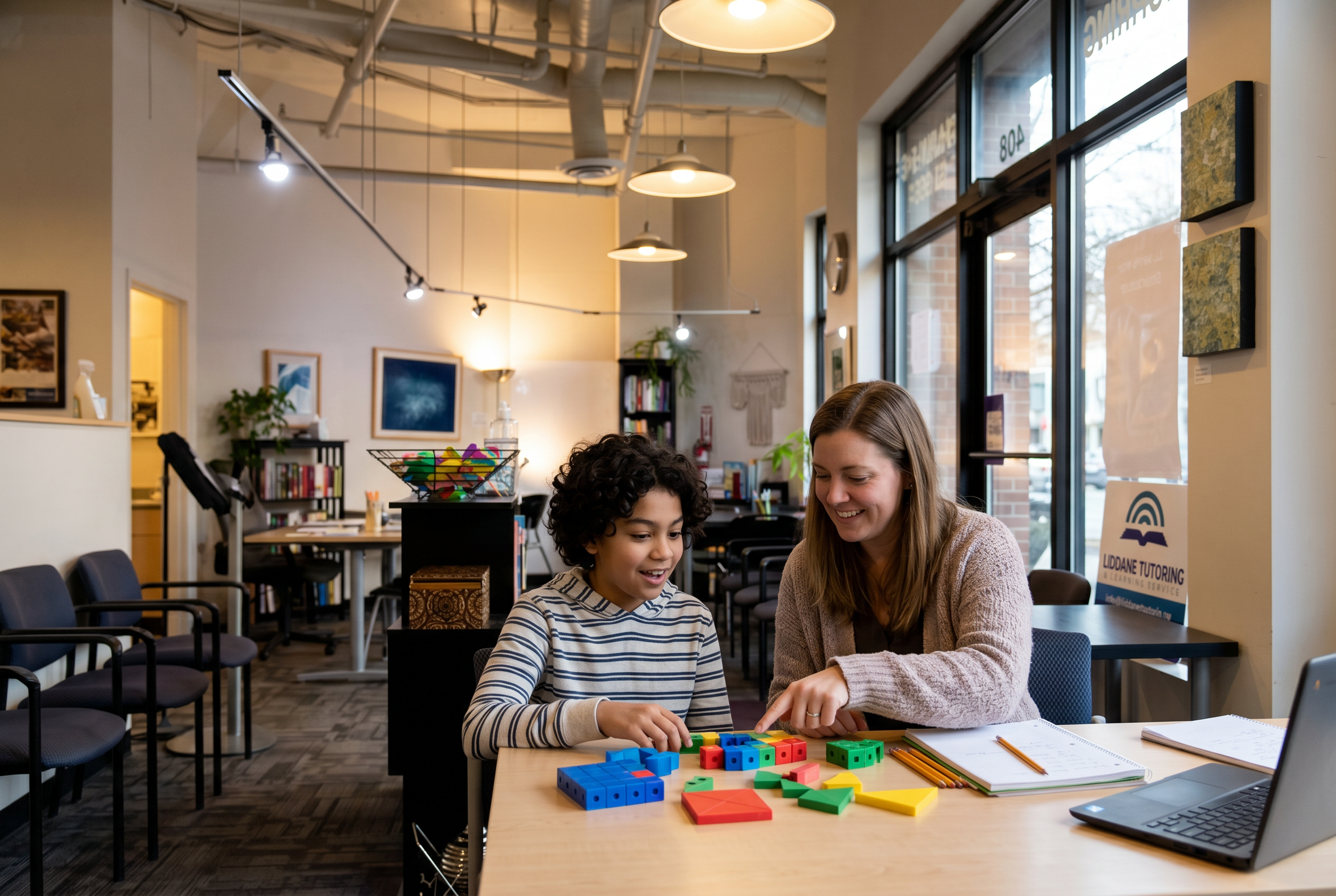
What Is Dyscalculia? Signs, Symptoms, and How Tutoring Can Help
For many students, math becomes challenging at some point in their academic journey. A tricky concept, a fast-paced classroom, or a difficult unit can make anyone feel a little lost.
But for some students, the struggle with math goes deeper than needing extra practice or a new way to approach a problem. Numbers may feel confusing from the start. Patterns don’t quite click. Even basic math concepts can feel frustrating or overwhelming.
When this happens consistently, it may be related to a learning difference called dyscalculia.
Understanding dyscalculia can help parents better support their child and find the tools that allow them to build confidence with math.
For many families in Seattle, math struggles can become more noticeable as students move through elementary and middle school, when coursework becomes more complex and expectations increase. Knowing what signs to look for can help parents identify when additional support may be helpful.
What Is Dyscalculia?
Dyscalculia is a learning difference that affects how a student understands numbers and mathematical relationships. It is sometimes described as the math equivalent of dyslexia.
Students with dyscalculia may have difficulty developing number sense, remembering math facts, or understanding how numbers relate to one another. Tasks that rely on these skills, like solving multi-step problems or working with fractions, can become especially challenging.
In many cases, these difficulties begin to appear in elementary school. However, they often become more noticeable as students move into higher grade levels and math concepts become more abstract.
It’s important to remember that dyscalculia has nothing to do with intelligence. Many bright, capable students simply process numbers differently and benefit from learning strategies that support the way their brain works.
Signs Parents Might Notice
Every child learns differently, and struggling with math from time to time is completely normal. However, when certain challenges appear consistently, they may signal the need for additional support.
Some common signs of dyscalculia include difficulty recognizing numbers or understanding quantity, trouble remembering basic math facts, and challenges with counting, telling time, or working with money.
Students may also feel overwhelmed by multi-step math problems or experience growing frustration and anxiety around math assignments.
Not every student who struggles with math has dyscalculia, but when these patterns appear repeatedly, it can be helpful to explore learning support options.
Many Seattle parents first begin asking questions about dyscalculia when they notice their child consistently struggling with math homework or feeling anxious about math tests. Identifying these patterns early can make it easier to find the right support.
How Tutoring Can Help Students With Dyscalculia
For students with dyscalculia, the right kind of support can make a meaningful difference.
In a traditional classroom setting, teachers often have limited time to slow down and revisit foundational concepts. Tutoring creates space for students to learn at their own pace, ask questions freely, and build skills step by step.
At Liddane Tutoring and Learning Services, we work with students from across the Seattle area who need additional support with math and other academic subjects.
Tutors help break math concepts into manageable pieces so students can focus on truly understanding each step before moving forward. Rather than rushing through material, students have the opportunity to develop a deeper understanding of the “why” behind the numbers.
Visual tools, hands-on learning strategies, and real-world examples can also help make math feel more approachable. For many students, this shift in approach allows numbers to start making sense in a way they never have before.
Just as importantly, tutoring helps rebuild confidence. When students begin to experience small successes in math, their mindset often changes as well. A subject that once felt intimidating can gradually become something they feel capable of navigating.
Supporting Students Beyond the Classroom
Parents play an important role in helping students with dyscalculia feel supported and encouraged.
Simple reminders that learning differences are normal, celebrating progress rather than perfection, and creating a positive environment around learning can all help reduce the pressure many students feel around math.
For families in Seattle and the surrounding communities, tutoring can provide an additional layer of support that helps students stay engaged and continue building important skills throughout the school year.
A Different Path to Learning
Every student learns differently, and sometimes the traditional path simply isn’t the one that works best.
For students with dyscalculia, personalized instruction and thoughtful support can transform how they experience math. What once felt confusing can begin to feel manageable, and confidence can grow alongside understanding.
When families take the time to understand how their child learns best, they open the door to new strategies, new progress, and a much more positive learning experience overall.

How to Keep Your Child on Track Before Spring Break

As the school year moves past the halfway point, many families begin to notice a shift. The excitement of fall routines has worn off, winter days feel long, and motivation can dip for even the most dedicated students. This mid-year period is completely normal, but it is also an important opportunity to pause, reflect, and make small adjustments that can have a big impact for the rest of the year.
A mid-year academic check-in does not have to be complicated. In fact, the most effective resets are often simple, consistent, and focused on maintaining momentum rather than catching up.
Why February Is a Natural Reset Point
By February, teachers have delivered fall conference feedback, grading patterns are clearer, and families have a better understanding of how the school year is unfolding. Rather than waiting until report cards or standardized testing season, this is an ideal time to evaluate progress and set one or two realistic goals for spring.
A reset at this stage is not about assuming something is wrong. It is about staying proactive and supporting students before small challenges become larger ones.
Signs It May Be Time for an Academic Check-In
Not every student shows the same indicators, but there are a few common patterns parents may notice:
Homework taking longer than usual
Increased frustration with certain subjects
Avoidance of school conversations or assignments
Teacher feedback suggesting skill gaps or confidence dips
A change in study habits or organization
Grades that do not reflect the student’s effort
If you’re noticing several of these patterns, learning more about a personalized tutoring approach can be a helpful next step.
The Power of Small Weekly Support
One of the biggest misconceptions about academic support is that it requires a large time commitment. In reality, consistency matters more than volume. Even one to two focused hours per week can help students reinforce skills, build confidence, and prevent knowledge gaps from widening.
Short, regular sessions create rhythm and accountability. They also allow students to ask questions before frustration builds, which can significantly reduce stress for both families and learners. Families who want to explore options can easily schedule a check-in session to start small.
Revisit Fall Conference Notes
A practical starting point for any mid-year reset is reviewing notes from fall conferences or teacher communications. Ask a few simple questions:
Which areas were identified as strengths?
Where did teachers suggest improvement?
Have those areas changed, improved, or remained the same?
What is one achievable academic goal for spring?
This process does not require perfection. The goal is clarity and direction.
How to Do a Mid-Year Reset at Home
Families can support students with a few small, manageable steps:
Choose one consistent study day or time each week
Identify one academic goal for the spring semester
Ask your child which subject feels most challenging right now
Break large assignments into smaller tasks
Consider outside academic support if confidence or skills feel stuck
These small shifts often lead to noticeable improvements in focus and morale.
Experience Matters
For 25 years, Liddane Tutoring has worked alongside families during these mid-year transitions, helping students strengthen skills, develop confidence, and discover learning strategies that work for them. Personalized support allows students to move forward with clarity rather than pressure.
Not Sure Where Your Child Stands?
If you are unsure whether your child could benefit from additional academic support, starting with a quick assessment can provide helpful direction. A short parent quiz can highlight strengths, identify potential gaps, and offer clarity on next steps without commitment or pressure.
Take the Academic Support Quiz to get a quick snapshot of where your student stands.
What to Do If You’re Struggling at the Start of a New Semester
(And Why It’s So Common)
If a new semester has started and things already feel harder than you expected, you’re not alone.
Many students assume a new semester is supposed to feel like a clean slate. New classes, new teachers, a fresh start. But for a lot of students, the beginning of a semester actually feels confusing, overwhelming, or discouraging, even if they did well before.
Struggling at the start of a new semester does not mean something is wrong. In many cases, it simply means they are adjusting to change.
Why Semester Transitions Are Hard for Students
Semester transitions ask students to adapt quickly, often before they’ve had time to fully process what has changed. Even small shifts can add up.
Some of the most common challenges include:
New teachers with different expectations and teaching styles
Changes in workload, pacing, or grading
Increased independence and responsibility
New routines, schedules, or study demands
Pressure to “do better” than last semester
For students with learning differences or executive functioning challenges, these transitions can feel even heavier. Organization, time management, and planning skills are suddenly more important, and those skills take time to develop.
The result is often frustration, self-doubt, or feeling stuck before the semester has really begun.
The Reality: It’s About Strategy, Not Just Study Help
Here’s something no one really teaches you in college: studying is not one-size-fits-all.
Tutoring isn’t just about surviving a tough class. It’s about learning how you learn. Some people need visuals. Others need repetition. Some thrive with structure and accountability. Most of us need a mix of all three.
Our tutors work with University of Washington students on:
Study skills and time management, because the quarter system moves fast
Test prep that builds confidence instead of panic
Accountability, especially when motivation dips around week sevenStress management, because yes, burnout is real…and coffee doesn’t fix it
Think of tutoring as your built-in strategy session. You’re not just reviewing content. You’re learning how to make your study time actually work for you.
Signs a Student Might Be Struggling
Struggling does not always show up as bad grades right away. Some common signs include:
Avoiding schoolwork or procrastinating more than usual
Feeling overwhelmed and not knowing where to start
Increased frustration, shutdown, or emotional reactions
Trouble keeping track of assignments or deadlines
Saying things like “I don’t get it” or “I’m already behind”
These signals are not failures. They are cues that a student may need clarity, support, or a chance to slow down and regroup.
What to Do If the Semester Feels Hard
When things feel difficult early on, it’s tempting to push harder or try to change everything at once. A more effective approach is to focus on small, intentional adjustments.
Here are a few steps that can help.
Pause and Reflect
Instead of jumping straight into problem-solving, take a moment to reflect:
What feels confusing or stressful right now?
What felt manageable last semester?
What is one thing that could make this feel easier?
Even naming the challenge can reduce overwhelm.
Clarify Expectations Early
Many students struggle because expectations are unclear. Writing down what each teacher expects for homework, tests, and participation can make a big difference. When expectations feel concrete, tasks become more manageable.
Adjust One Routine
Rather than overhauling everything, choose one routine to reset. This might be how assignments are tracked, when homework starts, or how materials are organized. Small changes are easier to maintain and often more effective.
Ask for Help Sooner
Waiting until frustration builds makes things harder. Asking for help early, whether from a teacher, parent, or tutor, helps students feel supported and prevents small challenges from becoming bigger ones.
Check In Weekly
A short weekly reflection can be more helpful than daily pressure. Questions like “What went well this week?” and “What felt hard?” encourage awareness without added stress.
How Tutoring Can Help During a Semester Transition
Tutoring during a semester transition is not just about catching up. It’s about helping students understand expectations, organize their work, and build confidence as demands shift.
At Liddane Tutoring & Learning Services, we work with students to:
Break assignments into manageable steps
Develop organization and planning strategies
Clarify expectations and reduce confusion
Build confidence and self-advocacy skills
Adjust learning strategies to fit how each student learns
For many students, having a consistent, supportive space to process what’s changing can make the difference between feeling overwhelmed and feeling capable.
A Reminder for Students and Parents
Struggling at the start of a new semester does not mean the semester is going to be a failure. It often means a student is learning how to adapt to new expectations.
With patience, reflection, and the right support, students can move through transitions with confidence and build skills that last well beyond this semester.
If your student could benefit from support during this transition, Liddane Tutoring is here to help.

What Every University of Washington Student Should Know About Tutoring (But No One Talks About)

College at the University of Washington is a whirlwind. Between challenging courses, late-night study sessions in Odegaard, and trying to juggle clubs, part-time jobs, and your social life, it can feel like everyone else has it all together.
Spoiler: they don’t.
Even the most organized, high-achieving Huskies hit points where things start to pile up. Sometimes it’s a brutal class (looking at you, organic chem). Other times it’s the simple math of not enough hours in the day. That’s where tutoring comes in, and not in the way you might think.
The Myth: Tutoring Is Only for Struggling Students
Let’s be real. When most people hear “tutoring,” they picture someone cramming for a test after bombing their first exam. But that’s not what tutoring looks like here.
At Liddane Tutoring, many U Dub students come to us not because they’re failing, but because they’re aiming higher. They’re the ones who plan ahead and want to walk into midterms and finals feeling calm, not panicked.
Tutoring isn’t a last resort. It’s like office hours, but one-on-one and completely focused on you. It’s for the student who wants to actually understand the material instead of memorizing it for the test. It’s for the student who’s tired of rereading the same sentence three times and still not getting it.
Maybe you’re wrestling with a thesis that doesn’t quite say what you mean. Maybe you’ve been staring at the same calculus problem for two hours and your brain just won’t cooperate. Or maybe you just need help organizing your notes before a big exam. Whatever it is, tutoring helps you work through it, so you don’t have to figure it all out alone.
The Reality: It’s About Strategy, Not Just Study Help
Here’s something no one really teaches you in college: studying is not one-size-fits-all.
Tutoring isn’t just about surviving a tough class. It’s about learning how you learn. Some people need visuals. Others need repetition. Some thrive with structure and accountability. Most of us need a mix of all three.
Our tutors work with University of Washington students on:
Study skills and time management, because the quarter system moves fast
Test prep that builds confidence instead of panic
Accountability, especially when motivation dips around week sevenStress management, because yes, burnout is real…and coffee doesn’t fix it
Think of tutoring as your built-in strategy session. You’re not just reviewing content. You’re learning how to make your study time actually work for you.
The Hidden Perk: You Actually Get Time Back
Here’s the part nobody talks about: tutoring doesn’t just help you do better in class, it gives you your life back.
Once you figure out how to study efficiently, you suddenly have hours you didn’t know you could get back. Instead of spending your entire Sunday “catching up,” you’re caught up by Friday.
That means more time for the things that make college fun, brunch with your friends, a walk through the Quad, a nap (because we all need one), or simply a break from constantly feeling behind.
Productivity isn’t about doing more. It’s about doing it smarter. And tutoring helps you do exactly that.
The Feedback: Why Students Choose Liddane Tutoring
Something we hear all the time from U Dub students is that they prefer Liddane Tutoring over campus tutoring, and it usually comes down to time and attention.
Campus tutoring centers often juggle multiple students at once, which means not every question gets answered. You can leave those sessions feeling like you still don’t fully get it, or worse, more confused than before.
At Liddane Tutoring, sessions are entirely focused on you. You get one-on-one attention, clear explanations, and the space to ask every question without feeling rushed. That difference is what helps students walk away confident and ready to tackle what’s next.
The Proof: University of Washington Students Are Already Doing It
If you think you’re the only one considering tutoring, you’re not.
Our tutors work with students across biology, calculus, psychology, writing, computer science, and more. Some meet weekly to stay consistent, while others come in before big exams or deadlines. Either way, the feedback is almost always the same:
“I wish I’d started sooner.”
Once you realize how much easier it is to stay on top of everything without losing your sanity, you start to wonder why more people aren’t doing it. The truth? They probably are, they’re just not talking about it.
The Takeaway: Tutoring = Confidence
At the end of the day, tutoring isn’t about “fixing” anything. It’s about support. It’s about realizing you don’t have to carry every class, paper, and project on your own.
College is supposed to be about learning, not constant stress. Tutoring helps you find that balance between doing your best and actually enjoying the experience.
Ready to See What Tutoring Could Do for You?
Tutoring doesn’t have to be intimidating, it’s about giving yourself the tools to succeed and the confidence to enjoy your time at the University of Washington.
Book your first session with Liddane Tutoring today. Our U Dub tutors are ready to help you study smarter, stress less, and find your rhythm this quarter.
Seattle Holiday Gift Guide: Small Shops, Big Impact
At Liddane Tutoring & Learning Services, we know what it means to be a small business in Seattle. Every family who walks through our doors reminds us that running a small business isn’t just about services and schedules. It’s about relationships, community, and the belief that what you do each day makes a real difference.
That’s why, when the holiday season rolls around, we make it a point to celebrate the other small businesses that keep Seattle vibrant. We know firsthand how much it matters when a parent chooses local — it’s not just a purchase, it’s a vote of confidence in the people behind the counter.
This year, we’ve put together a guide to some of our favorite local shops and experiences. Whether you’re shopping in Green Lake after a tutoring session or exploring neighborhoods across the city, these are places where your dollars have a big impact and your gifts carry extra meaning.
Why Shopping Small in Seattle Matters
When you shop small, you’re doing more than crossing gifts off a list. You’re:
Supporting family-owned businesses.
Keeping money in the community.
Finding gifts that are unique, personal, and memorable.
For parents, it’s a way to simplify holiday shopping while still giving thoughtfully.
Green Lake Favorites (Close to Home)
If you’re already dropping your student off near our Green Lake office, here are a few easy stops to make holiday errands more meaningful:
Retreat Greenlake: A cozy café with seasonal drinks and gift cards perfect for teachers or coaches.
Mockingbird Books: A charming children’s bookstore filled with picture books, middle grade adventures, and YA favorites.
Eighty4: A boutique offering home goods and locally made gifts for all ages.
Seattle Gems Beyond Green Lake
Elliott Bay Book Company (Capitol Hill): A literary landmark with something for every reader.
Glassybaby (Madrona & SODO): Hand-blown glass votives that are both beautiful and meaningful, with proceeds supporting local charities.
Flora & Henri (Pioneer Square): Elevated gifts, toys, and clothing for parents who want something extra special.
Made in Washington: From food to art, it’s a one-stop shop for locally made treasures.
Experiences to Gift
Some of the best gifts don’t come wrapped. Instead, they create memories:
Seattle Aquarium or Pacific Science Center memberships for family outings.
Local classes in art, music, or sports to nurture new passions.
Tutoring sessions at Liddane, the gift of confidence and learning that lasts well beyond the season.
This holiday season, let’s slow down and choose gifts with intention. Shopping small in Seattle not only makes your presents more meaningful, it also strengthens the community our families call home.
From books to experiences to the gift of learning, these are the treasures that remind us what giving is all about.
The Best Study Spots in Seattle: Green Lake and Beyond
At Liddane Tutoring & Learning Services in Seattle’s Green Lake neighborhood, we know that where a student studies can be just as important as what they study. A quiet corner, a lively café, or a scenic park can all spark focus and motivation. Fall is the perfect time to explore the city and find study environments that support learning.
Whether your student is preparing for the SAT, ACT, SSAT, ISEE, or HSPT, writing college essays, or just needs a calm place to tackle homework, here are some of the best study spots in Seattle — including some of our favorites right here near Green Lake.
Why Study Spots Matter for Seattle Students
Finding the right study environment is about more than ambiance. A consistent routine helps students build confidence and focus, the same values we emphasize at Liddane Tutoring & Learning Services. Pairing personalized tutoring with intentional study spaces sets students up for success in every subject, from math and writing to standardized test prep.
If your family is searching for tutoring in Seattle or Green Lake, we’d love to help. Whether it’s one-on-one test prep for the SAT, ACT, SSAT, ISEE, or HSPT, or support in reading, writing, and math, Liddane offers personalized tutoring that meets your student exactly where they are.
Ready to learn more?
Contact Liddane Tutoring & Learning Services today to secure your student’s fall enrollment.
Coffee Shops and Cafés in Green Lake and Seattle
Zoka Coffee Roasters (Green Lake & University District)
A longtime favorite for Seattle students, Zoka has big tables, reliable Wi-Fi, and the steady hum that makes it easy to stay focused.
Retreat Greenlake
Just minutes from Liddane Tutoring, this café has a vibrant, energetic feel. It’s perfect for shorter study sessions or a parent waiting while their student is in a tutoring session.
Storyville Coffee (Pike Place & Queen Anne)
Cozy lighting, comfortable seating, and strong coffee make this a great spot for drafting essays or reading assignments.
Libraries for Quiet Focus
Seattle Public Library – Central Library
The downtown landmark is known for its architecture and quiet study spaces. With floor after floor of workstations, it’s one of the best places to concentrate in the city.
UW Suzzallo Library
Famous for its Hogwarts-like reading room, Suzzallo inspires focus. It’s ideal for high school or college students preparing for exams or writing papers.
Seattle Public Library – Green Lake Branch
Close to home and easy to access, this neighborhood branch offers calm study areas, perfect for students before or after tutoring sessions at Liddane.
Outdoor Study Spots in Seattle
Green Lake Park
Right in our backyard, Green Lake is a classic Seattle study spot. Students can review flashcards, read, or brainstorm essays while enjoying the fall colors.
Gas Works Park
Great for light studying or group work, with views of Lake Union that make even tough assignments feel lighter.
UW Quad
Especially beautiful in the fall, with Wi-Fi and benches that are perfect for a quick study break between classes or tutoring sessions.
Unique Study Spaces
Elliott Bay Book Company (Capitol Hill)
This beloved Seattle bookstore offers tucked-away seating and a café. It’s a perfect place for students who feel most inspired when surrounded by books.
KEXP Gathering Space (Seattle Center)
Coffee, music, and community make this a lively option for collaborative projects.
MOHAI’s Compass Café (Lake Union)
Study with a lake view while enjoying a quieter atmosphere than many downtown coffee shops.

The Late-Night Call Every College Parent Gets: A Survival Guide for Crisis Moments

It’s 11:47 PM. Your phone lights up with your college student’s name. You brace yourself—these late-night calls rarely bring good news.
Through tears, you hear:
"I can’t do this anymore. Everyone else has it figured out. Maybe I’m not cut out for college."
If this sounds familiar, you’re not alone. Almost every parent of a college student will get a call like this at some point. Here’s how to handle it in ways that build resilience, not dependence.
Why the Call Happens
That midnight breakdown isn’t a sign of failure—it’s a sign of growth. College forces students to face challenges high school never demanded:
Emma, the Perfectionist: Straight-A student, crushed by her first C. She needed new study strategies, not a new major.
David, the Procrastinator: Used to pulling things off last-minute. Three papers due in one week exposed his weak time management.
Maya, the People-Pleaser: Too afraid to “bother” professors. Learned that asking for help is strength, not weakness.
The common thread? They weren’t lacking ability—they were developing new skills.
Your Role Has Changed
For 18 years, you’ve been the fixer. Now, your job is to shift from manager to consultant.
Do:
Listen and validate: “This sounds overwhelming.”
Ask strategic questions: “What have you tried? Who on campus can help?”
Don’t:
Rush to rescue.
Minimize their feelings.
Take over problem-solving.
When to Seek Extra Support
Sometimes, the best move is connecting your student with professional support.
At our core, we are tutors first. We explain concepts, walk through problems, and make sure the academics click. Because we get to know our students so well, we naturally weave in executive function skills like organization, study strategies, and self-advocacy. Think of it as executive function tutoring: the academic support students need, paired with the strategies that help them succeed long term.
Counseling can also play an important role, especially for anxiety, homesickness, or stress management. Together, these kinds of support provide objectivity, teach concrete skills, and ease family tension so you can stay in the role of cheerleader, not crisis manager.
What These Calls Really Mean
When your student calls in tears, it’s not just panic—it’s progress. It shows they:
Trust you enough to be vulnerable.
Know asking for help is healthy.
Are learning their limits and self-awareness.
Each call is an opportunity to help them grow from dependent teen to resilient adult.
The Ultimate Goal
The goal isn’t to stop the late-night calls, it’s to help your student learn how to struggle well.
With the right support, those midnight breakdowns become stepping stones toward independence. And one day, the call will come at a reasonable hour, not because they’re in crisis, but because they want to share something good.
At Liddane Tutoring & Learning Services, we help college students build the study skills, confidence, and independence they need to thrive—while guiding parents through their evolving role. Learn more about our college support services.

Why Smart College Students Struggle with "Optional" Work: The Executive Function Skills No One Teaches
"It's just optional homework, so I didn't do it."
As tutors at Liddane, we hear this from frustrated college students almost daily. Bright, capable kids who aced high school are suddenly struggling—not because they can't handle the material, but because no one ever taught them that "optional" in college means something completely different.

The Translation Crisis
High School "Optional":
Extra credit opportunities
Bonus work for overachievers
Safe to skip if you're doing well
Collage "Optional":
Essential background knowledge professors assume you have
The foundation for understanding complex concepts
Material that shows up on exams without warning
Jake learned this the hard way. A psychology freshman who skipped "optional" readings, he felt confident after lectures and bombed his first exam with a C+. "The questions were about studies we never discussed in class," he told us during his first Liddane session.
What Jake didn't realize? Those readings contained the examples and research that formed the basis for exam questions.
The Real Problem: Executive Function Gap
This isn't about intelligence—it's about executive decision-making skills that high school never required students to develop.
Strategic Decision-Making: College students must constantly evaluate which assignments will impact their understanding and grades.
Long-Term Consequence Assessment: Unlike high school's immediate feedback, college consequences can take weeks to appear.
Academic Context Reading: Students need to decode what professors really mean when they say work is "optional."
Why Even Excellent Students Struggle
The students we see most at Liddane are often former high school stars who:
Succeeded by following instructions perfectly, not making strategic choices
Never had to prioritize competing academic demands
Feel overwhelmed by the constant decision-making college requires
What Students Actually Need to Learn
Instead of asking "Is this required?", successful college students ask:
How does this connect to course objectives?
What knowledge is the professor assuming I have?
How does this build toward larger assessments?
At Liddane, we teach students these evaluation skills through our online tutoring platform. Our tutors help college students nationwide develop the strategic thinking that makes the difference between struggling and thriving.
The Long-Term Impact
Students who develop these executive function skills don't just get better grades. They become confident, strategic thinkers prepared for the ambiguous challenges they'll face throughout their careers.
The goal isn't to eliminate struggle—it's to help students develop the thinking skills they need to navigate challenge successfully.
Moving Forward
If your college student is struggling with independent decision-making, know that these skills are completely learnable. It's never too late in the semester to start building them.
The students who thrive aren't necessarily the smartest ones. They're the ones who learn to think strategically about their learning and aren't afraid to seek support when they need it.
After all, recognizing when you need help developing new skills? That's exactly the kind of strategic thinking college is designed to teach.
Rising Senior Timeline: Critical Steps for College Application Success
The summer before senior year marks a pivotal moment in your academic journey. With college applications looming on the horizon, it's natural to feel both excited and overwhelmed. The good news? With proper planning and a clear timeline, you can navigate the college application process with confidence and reduce stress along the way.
This comprehensive guide breaks down everything you need to accomplish from summer through senior year, ensuring you don't miss any critical deadlines or opportunities that could impact your college admissions success.
Summer Before Senior Year: Foundation Building
June - July: Research and Reflection
Finalize Your College List Create a balanced list of 8-12 schools that includes reach, match, and safety schools. Research each institution thoroughly, considering factors like academic programs, campus culture, location, size, and financial aid offerings. Use resources like college websites, virtual tours, and student forums to get a comprehensive view of each school.
Standardized Test Preparation If you haven't achieved your target SAT or ACT scores, summer is the ideal time for intensive test prep. Register for fall test dates now, as spots fill quickly. Consider taking subject tests if required by your target schools. Remember, most colleges accept scores from tests taken through December of your senior year.
Begin Your Personal Statement Start brainstorming and drafting your main college essay. The Common Application typically releases new prompts in early summer, giving you a head start. Focus on authentic storytelling that reveals who you are beyond grades and test scores. Don't aim for perfection in your first draft—just get your ideas down.
Gather Application Materials Request official transcripts from your school's guidance office and research any additional documents required by your target schools. Some institutions require portfolios, writing samples, or specific forms that take time to prepare.
August: Momentum Building
Teacher Recommendation Requests Ask 2-3 teachers who know you well to write recommendation letters. Choose teachers from core academic subjects who can speak to your intellectual curiosity and growth. Provide them with your resume, a brief personal statement about your goals, and specific examples of your work in their classes. Give them at least 8-10 weeks before your earliest deadline, and don't forget to follow up with a thank-you note.
Resume and Activities List Creation Compile a comprehensive resume and activities list highlighting your academic achievements, extracurricular activities, leadership roles, volunteer work, and employment history. Focus on impact and growth, not just participation. This document will be invaluable for applications, interviews, scholarship opportunities, and helping your recommenders write stronger letters.
Financial Aid Preparation Research scholarship opportunities and note application deadlines. Gather financial documents you'll need for the FAFSA, which becomes available October 1st. Create accounts on scholarship search engines and your state's financial aid website.
Fall Senior Year: Application Execution
September: Systems and Organization
Application Platform Setup Create accounts on Common Application, Coalition Application, and individual college application portals. Familiarize yourself with each platform's requirements and deadlines. Set up a tracking system—whether digital or physical—to monitor your progress.
Essay Writing Sprint Dedicate significant time to writing and revising your personal statement and supplemental essays. Each school's essays should feel tailored to that institution. Research the school's values, programs, and culture to craft authentic responses that demonstrate genuine interest.
Counselor Meeting Schedule a meeting with your school counselor to discuss your college list, review graduation requirements, and ensure they have everything needed for your counselor recommendation and school report.
October: Deadlines and Details
Early Decision/Early Action Preparation If applying early decision or early action, these applications are typically due November 1st. Ensure all components are complete and polished. Remember that early decision is binding, so only apply ED to your absolute top choice.
FAFSA Submission Submit your Free Application for Federal Student Aid (FAFSA) as soon as possible after October 1st. Many states and schools award aid on a first-come, first-served basis. Don't wait until you've been accepted to complete this crucial step.
Final Standardized Testing Take your final SAT or ACT if needed. Most schools accept scores from October tests for early applications and December tests for regular decision.
November: Submission and Follow-Up
Application Submissions Submit early decision and early action applications by November 1st. Double-check that all required materials have been received by checking your application portals regularly. Follow up with teachers and counselors to ensure recommendations are submitted.
Interview Preparation Some schools offer or require interviews. Practice common questions, research each school thoroughly, and prepare thoughtful questions to ask your interviewer. Treat every interaction as part of your application.
Continued Research Use this time to research additional schools and refine your regular decision application list. Attend virtual college fairs and information sessions to learn more about your options.
Winter Senior Year: Final Push
December: Regular Decision Focus
Regular Decision Applications Most regular decision applications are due between December 15th and January 15th. Use lessons learned from your early applications to strengthen these submissions. Each application should feel fresh and tailored to the specific school.
Mid-Year Grade Reports Maintain strong grades in your fall semester courses. Colleges will receive your mid-year grades, and significant drops in performance can impact admission decisions.
Scholarship Applications Many scholarship deadlines fall between December and March. Dedicate time to applying for both need-based and merit-based opportunities. Don't overlook local scholarships, which often have less competition.
January - February: Patience and Persistence
Final Application Submissions Submit remaining applications by their deadlines. The most common deadline is January 15th, but check each school's specific requirements. Some schools have deadlines as late as February or March.
Financial Aid Follow-Up Complete any additional financial aid forms required by your schools, such as the CSS Profile or institutional aid applications. Some schools have their own financial aid deadlines that differ from admission deadlines.
Senior Year Course Selection If you haven't already, finalize your spring semester courses. Colleges expect you to maintain a challenging course load through graduation, and significant changes may require approval.
Spring Senior Year: Decision Time
March - April: Results and Choices
Decision Letters Most admission decisions are released between mid-March and early April. Create a system for tracking decisions and celebrate each acceptance, regardless of where you ultimately decide to attend.
Financial Aid Comparisons Compare financial aid offers carefully, looking beyond just the total amount to understand what's grants versus loans. Use net price calculators and don't hesitate to appeal aid decisions if your circumstances warrant it.
Campus Visits If possible, visit your top choice schools, especially if you haven't seen them in person. Many schools offer admitted student days that provide valuable insights into campus life and academic programs.
May: Final Commitments
Decision Deadline You must commit to one school by May 1st (National College Decision Day). Submit your enrollment deposit and complete any required forms. Notify schools you're declining promptly—it's courteous and helps other students on waiting lists.
Final Preparations Complete housing applications, register for orientation, and begin planning for your transition to college. Send final transcripts to your chosen school and maintain strong grades through graduation.
Pro Tips for Success
Stay Organized Use a planner, spreadsheet, or app to track deadlines, requirements, and submission status. The college application process involves many moving parts, and organization is key to avoiding missed opportunities.
Start Early Every component of the application process takes longer than expected. Beginning early reduces stress and allows time for multiple revisions and improvements.
Be Authentic Colleges want to understand who you are as a person, not just as a student. Let your personality shine through in your essays and interviews rather than trying to be who you think they want.
Communicate Regularly Stay in touch with teachers, counselors, and family members who are supporting your process. Regular check-ins help ensure nothing falls through the cracks.
Have Backup Plans Apply to a range of schools and have alternatives ready. The college admission process is unpredictable, and having options reduces stress.
Managing Stress and Expectations
Remember that the college application process is a marathon, not a sprint. It's normal to feel overwhelmed at times, but breaking the process into manageable steps makes it much more achievable. Focus on what you can control—your effort, preparation, and attitude—rather than worrying about outcomes.
Most importantly, remember that there are many paths to success, and the "right" college is one where you can thrive academically, socially, and personally. Trust the process, stay organized, and don't hesitate to ask for help when you need it.
Ready to Navigate Your College Application Journey?
The college application process can feel overwhelming, but you don't have to go through it alone. At Liddane Tutoring, we offer comprehensive college application support designed to guide you through every step of this crucial timeline.
Our College Application Services Include:
College List & Year-Round Application Support - Our signature year-long program includes personalized college list development, summer college workshops, one-on-one support, and timely resources delivered when you need them most.
College Application Tutoring - Work with dedicated tutors who specialize in application requirements, task management, compelling personal statements, and supplementary essays while helping you monitor deadlines and maintain momentum.
College Application Workshops - Join our focused small group workshops, available in Original format (3 hours daily with continuous feedback) or Independent format (1 hour daily plus 2 hours of individual follow-up).
Specialized Support Areas:
Essay writing and brainstorming assistance
Activities list and resume development
Application form completion guidance
Interview preparation and mock interviews
Time management and executive function support
Standardized test preparation
Start Your Journey with Our Free Webinar New to the college application process? Begin with our free "Demystifying the College Application Process" webinar, designed for sophomores, juniors, and their families. Learn about timelines, developing a best-fit college list, the admissions process, and financial aid basics.
Ready to turn your college dreams into reality? Contact Liddane Tutoring today to learn more about our college application support programs. Whether you need comprehensive year-round guidance or targeted assistance with specific application components, we're here to help you navigate this important milestone with confidence.
Study Organization Hacks for Any Learning Style
Every student learns differently, and what works for one person might not work for another. Understanding your unique learning style is the key to developing an organizational system that actually sticks. Whether you're a visual learner who needs color-coded notes or a kinesthetic learner who studies best while moving, there are specific strategies that can transform your study routine from chaotic to streamlined.
Understanding Your Learning Style
Before diving into organization hacks, it's important to identify how you process information best. Most people fall into one of these primary learning styles:
Visual Learners absorb information through seeing and spatial understanding. They benefit from charts, diagrams, color coding, and visual organization systems.
Auditory Learners process information through listening and speaking. They excel with verbal explanations, discussions, and audio-based study methods.
Kinesthetic Learners learn through movement and hands-on activities. They need to engage physically with material and often study better while moving or manipulating objects.
Reading/Writing Learners prefer text-based learning. They excel with written notes, lists, and traditional study methods involving reading and writing.
Visual Learning Organization Hacks
Color-Coded Everything
Create a color system for different subjects or types of content. Use colored pens, highlighters, folders, and sticky notes consistently. For example, blue for math, green for science, yellow for history. This visual association helps your brain quickly categorize and recall information.
Mind Maps and Visual Organizers
Transform linear notes into visual mind maps. Start with a central topic in the middle of a page and branch out with related concepts. Use different colors, shapes, and symbols to create memorable visual connections between ideas.
Digital Organization with Visual Tools
Utilize apps like Notion, Milanote, or Trello that allow you to create visual boards and layouts. These platforms let you organize information spatially, which aligns perfectly with how visual learners process information.
Study Space Design
Organize your physical study space with visual cues. Use wall calendars, bulletin boards with pinned reminders, and clear storage containers where you can see contents at a glance. Keep frequently used materials within sight rather than hidden in drawers.
Auditory Learning Organization Hacks
Voice Recording Systems
Record yourself reading notes aloud and organize these recordings by subject and topic. Create a digital library of your own voice explaining concepts, which you can listen to during commutes or while doing other activities.
Study Group Scheduling
Build regular discussion sessions into your organization system. Schedule weekly study groups where you can talk through concepts with peers. Use shared calendars to coordinate group sessions and assign speaking topics in advance.
Verbal Planning Methods
Instead of written to-do lists, try recording voice memos with your daily study goals. Some auditory learners find it more effective to hear their own voice outlining tasks rather than reading them silently.
Audio Note Organization
Use apps like Otter.ai or Rev to transcribe lectures and discussions. Organize these transcriptions by date and subject, creating a searchable database of spoken content that you can both read and listen to.
Kinesthetic Learning Organization Hacks
Movement-Based Study Systems
Create study stations around your room or home where you can move between different subjects or activities. Organize materials in portable containers that you can easily transport to different locations.
Hands-On Organization Tools
Use physical manipulatives like index cards, sticky notes, and moveable pieces to organize information. Create sorting systems where you can physically move concepts into different categories or sequences.
Active Break Scheduling
Build movement breaks into your study schedule. Use timers to remind yourself to stand, stretch, or take short walks between study sessions. Organize your schedule to alternate between high-focus work and movement-based activities.
Interactive Study Materials
Organize interactive elements into your study routine. Keep fidget tools, stress balls, or other tactile objects within reach. Some kinesthetic learners focus better when their hands are occupied with small movements.
Reading/Writing Learning Organization Hacks
Comprehensive Note-Taking Systems
Develop a consistent note-taking method like the Cornell Note-Taking System or outline method. Organize notes with clear headings, subheadings, and consistent formatting that makes review efficient.
List-Based Planning
Create detailed written to-do lists and study schedules. Break large projects into smaller, written tasks that you can check off as you complete them. The act of writing and crossing off items provides satisfaction and momentum.
Summary and Review Systems
Organize regular review sessions where you create written summaries of previous material. Keep these summaries in organized binders or digital folders that you can reference quickly before exams.
Reading Schedule Organization
Create detailed reading schedules that break assignments into manageable daily portions. Use written logs to track your progress and comprehension, noting questions or concepts that need further review.
Universal Organization Strategies
The Master Calendar System
Regardless of your learning style, maintain one comprehensive calendar that includes all assignments, exams, and deadlines. Choose a format that works with your style—visual learners might prefer colorful wall calendars, while reading/writing learners might favor detailed written planners.
Weekly Planning Rituals
Establish a consistent weekly planning session where you review the upcoming week and organize your priorities. This ritual helps create structure and ensures nothing falls through the cracks.
Digital and Physical Backup Systems
Create both digital and physical organization systems so you're never caught without access to important information. Sync digital calendars across devices and keep physical backup copies of essential materials.
Regular Decluttering Sessions
Schedule monthly organization sessions to clean out old materials, reorganize systems, and update your methods. What works at the beginning of the semester might need adjustment as your courses progress.
Making It Stick: Implementation Tips
Start with one or two organization strategies that align with your learning style rather than trying to implement everything at once. Give each new system at least two weeks to become a habit before adding additional methods.
Remember that most people have a combination of learning styles, so don't be afraid to mix and match strategies. The goal is to find what works best for you, not to fit perfectly into one category.
Finally, be patient with yourself as you develop new organizational habits. Like any skill, effective organization takes practice and refinement. The investment you make in creating systems that work with your learning style will pay dividends throughout your academic journey.
Your learning style is your superpower when it comes to organization. By understanding how you process information best and implementing strategies that align with your natural tendencies, you'll create study systems that feel effortless and actually help you succeed. Remember, the best organization system is the one you'll actually use consistently.
Ready to Take Your Study Skills to the Next Level?
While these organization hacks can transform your study routine, sometimes you need personalized guidance to discover what works best for you. At Liddane Tutoring & Learning Services, our experienced tutors don't just help with subject-specific content—we work with you to identify your unique learning style and develop customized organizational strategies that stick.
Whether you're struggling to find an organization system that works, need help implementing these strategies, or want to optimize your study routine for better results, our tutors are here to support you every step of the way.
Ready to get organized and boost your academic performance? Contact Liddane Tutoring today to schedule your personalized tutoring session. Let's work together to create a study system that's as unique as you are.

The Liddane Method: Why One-on-One Tutoring Delivers Better Results
Group tutoring, classroom instruction, online courses – there are plenty of ways students can get academic help. So why does one-on-one tutoring consistently produce the best results?
After 24 years and hundreds of students, we have the data. Here's exactly why individual instruction works better.

Reason #1: Immediate Error Correction
The Problem: In group settings, students can practice mistakes for extended periods before anyone notices.
The One-on-One Solution: Errors are caught and corrected within minutes, not days or weeks.
When Sarah was learning fractions in her math class, she developed the misconception that you add denominators when adding fractions. For three weeks, she practiced this incorrect method in homework and classwork. By the time her teacher realized the error, Sarah had to unlearn weeks of practice before learning the correct method.
In one-on-one tutoring, this misconception would have been caught in the first problem. The result? Sarah learns correctly the first time instead of struggling to overcome ingrained mistakes.
The Measurable Difference: Students in one-on-one settings master concepts 3x faster than those in group instruction because they're not spending time unlearning incorrect methods.
Reason #2: Personalized Pacing
The Problem: Group instruction moves at the average pace, which is too fast for some students and too slow for others.
The One-On-One Solution: Instruction moves at each student's optimal learning speed.
Marcus understood algebra concepts quickly but needed extra time to master computational skills. In his algebra class, he fell behind because lessons moved to new concepts before he'd mastered the arithmetic. In one-on-one tutoring, we spent the necessary time on computation until it became automatic, then accelerated through concepts he grasped easily.
Emma was the opposite – she had strong computational skills but needed more time to understand abstract concepts. Her individual instruction spent minimal time on computations and focused on concept development.
The Measurable Difference: Students achieve 40% better comprehension when instruction matches their individual pacing needs.
Reason #3: Adaptive Teaching Methods
The Problem: Group instruction uses one teaching method and hopes it works for most students.
The One-On-One Solution: Teaching methods adapt to each student's learning style in real-time.
Visual learners need to see information. Auditory learners need to hear explanations. Kinesthetic learners need hands-on manipulation. Most students are combination learners who need multiple approaches.
In one-on-one tutoring, if a student looks confused during a verbal explanation, the tutor can immediately tailor their approach—switching to visual diagrams or hands-on examples. This kind of customized support happens in real time, not after a failed test.
The Measurable Difference: Students retain 60% more information when taught through their preferred learning modalities.
Reason #4: 100% Attention and Feedback
The Problem: In group settings, each student receives a fraction of the instructor's attention and feedback.
The One-On-One Solution: Students receive continuous attention and immediate feedback on every response.
In a classroom of 25 students, each child gets approximately 2.4 minutes of individual attention per hour. In one-on-one tutoring, students receive 60 minutes of focused attention per hour.
This isn't just about time – it's about quality of interaction.Every confused expression gets addressed. Every success gets acknowledged. This creates a feedback loop that accelerates learning exponentially.
The Measurable Difference: Students in one-on-one settings show 5x more engagement and participation than in group settings.
Reason #5: Customized Difficulty Level
The Problem: Group instruction aims for the middle difficulty level, leaving advanced students bored and struggling students overwhelmed.
The One-On-One Solution: Every problem and concept is calibrated to the student's current ability level plus appropriate challenge.
The "zone of proximal development" – the sweet spot where learning happens most efficiently – is different for every student. One-on-one tutoring keeps students in this zone consistently.
For struggling students, this means building confidence through achievable challenges before tackling harder concepts. For advanced students, this means intellectual stimulation that prevents boredom and maintains engagement.
The Measurable Difference: Students achieve optimal challenge levels 90% of the time in one-on-one settings versus 30% in group settings.
Reason #6: Focused Problem-Solving
The Problem: Group instruction must cover broad curriculum standards, often leaving specific student difficulties unaddressed.
The One-On-One Solution: Sessions focus exclusively on each student's specific knowledge gaps and skill deficits.
When David came to us failing chemistry, we didn't start with the current unit. We diagnosed exactly where his understanding broke down – which turned out to be basic algebraic manipulation, not chemistry concepts. We spent three sessions strengthening his algebra skills, then returned to chemistry. Suddenly, everything clicked.
This targeted approach is impossible in group settings where curriculum pacing takes priority over individual needs.
The Measurable Difference: Students close learning gaps 4x faster when instruction targets their specific deficits rather than following general curriculum.
Reason #7: Safe Learning Environment
The Problem: Many students avoid asking questions or admitting confusion in group settings due to social pressure.
The One-On-One Solution: Students feel safe to make mistakes, ask questions, and show vulnerability – all essential for deep learning.
Fear of looking stupid prevents learning. When students worry about peer judgment, they shut down intellectually. One-on-one tutoring eliminates this barrier completely.
Students ask questions they would never voice in class. They admit confusion without embarrassment. They take intellectual risks because the environment is psychologically safe.
The Measurable Difference: Students ask 6x more questions in one-on-one settings and demonstrate deeper understanding through their willingness to explore concepts thoroughly.
The Proof: Quantifiable Results
Over 24 years, we've tracked outcomes for students receiving one-on-one tutoring versus those in group instruction:
Grade Improvement: Average of 1.3 letter grades improvement in targeted subjects
Test Scores: Average SAT improvement of 180 points, ACT improvement of 4 points
Concept Mastery: 85% of students master target concepts within 10 sessions
Confidence Measures: 92% of students report increased academic confidence
Study Skills: 78% of students demonstrate improved independent learning abilities
These results aren't achievable through group instruction because the fundamental advantages of individual attention can't be replicated in group settings.
When One-on-One Makes the Biggest Difference
Learning Differences: Students with dyslexia, ADHD, processing disorders, executive functioning challenges, or other learning differences often need specialized approaches that group instruction can’t provide
Significant Gaps: Students who are behind grade level need intensive, targeted instruction to catch up quickly.
Advanced Learners: Gifted students need intellectual challenge and acceleration that group settings rarely offer.
Test Preparation: Standardized test improvement requires identifying and addressing individual weak areas.
Subject-Specific Struggles: Students who excel overall but struggle in specific subjects need targeted intervention.
The Bottom Line
One-on-one tutoring delivers better results because it addresses the fundamental limitations of group instruction: lack of individualization, insufficient attention, inappropriate pacing, and limited adaptability.
When instruction is perfectly calibrated to a student's needs, abilities, and learning style, remarkable improvement happens quickly and sustainably.
At Liddane Tutoring & Learning Services, we've built our entire approach around maximizing these advantages. Every session is designed to deliver the personalized attention that makes the difference between struggling and thriving.
Ready to see these results for your student? Contact Liddane Tutoring today to discuss how one-on-one instruction can transform their academic experience.

Summer: A Pivotal Choice in Your Child’s Educational Journey
Summer is more than just a break—it’s a critical bridge between academic years.
Summer is more than just a break—it’s a critical bridge between academic years. For many families, summer poses a significant decision: will you let the unstructured months slip by, accruing a “summer slide” that can set your child 2-3 months behind, or will you take proactive steps to ensure a season of growth and achievement? At Liddane Tutoring, we believe in turning summer into a season of strategic learning and confidence building.
Option 1: The Risks of Unstructured Summer Learning
Many parents hope that natural, unstructured learning opportunities will fill the summer months. Unfortunately, research has shown that without a structured plan, students can lose vital academic progress over the break. This “summer slide” can create challenges when transitioning back into school, making it harder for students to catch up and engage with new material.
Option 2: A Summer Transformed with Liddane Tutoring
Instead of leaving your child’s progress to chance, why not actively work towards a brighter academic future? Here’s how partnering with Liddane Tutoring can turn your child’s summer into a transformative experience:
• For Students with Learning Differences (Reading, Writing, or Math):
• Customized Strategies: We design learning methods that align with the unique way your child’s brain processes information.
• Specialized Techniques: Our tutoring sessions incorporate research-based techniques that build your child’s confidence and competence.
• Consistent Practice: With regular, pressure-free sessions, we help solidify foundational skills that are crucial for academic success.
• For College-Bound Seniors:
• Proactive Application Support: Tackle college applications and essays early—before school demands mount—ensuring you have ample time to perfect your submissions.
• Stress-Free Final Year: By handling critical tasks during the summer, you can enjoy a more memorable and balanced final year of high school.
• Strategic Approach: We help you navigate the application process with clear strategies, reducing the frantic rush and uncertainty.
Why Choose Liddane Tutoring?
At Liddane , we understand the diverse needs of our students. Whether your child requires specialized support to overcome learning differences or is preparing for the complex college application process, our approach is designed to empower and build lasting academic resilience. With our expert guidance, you transform summer from a missed opportunity into a season of growth and preparation.
This summer, take the proactive step. Choose transformation over chance—choose Liddane Tutoring.

Make Senior Year Memorable—for the Right Reasons
High school seniors face a pivotal moment—their final year before stepping into the next phase of life. Yet, for many, senior year isn’t about excitement and celebration—it’s consumed by deadlines, stress, and sleepless nights spent agonizing over college applications.
At Liddane Tutoring, we believe that senior year should be filled with memorable moments, not last-minute panic. That’s why our College Application Workshops are designed to help students get ahead during the summer—so they start the school year prepared, confident, and stress-free.
The Senior Year Experience: A Tale of Two Students
📌 Senior A dives into fall semester balancing AP classes, extracurriculars, and looming college applications. Weekends disappear into essay writing. Social events get skipped for deadlines. Stress levels rise as sleep decreases. Family tensions mount as gentle reminders turn into anxious nagging.
📌 Senior B enjoys every football game, club meeting, and senior event because their college applications were already completed during summer sessions with Liddane. They step into senior year prepared, excited, and free to enjoy the moments that matter.
A Different Approach—Less Stress, More Confidence
During our summer workshops, students get expert guidance to:
✔️ Draft, refine, and finalize their personal statements before the school-year chaos begins
✔️ Complete supplemental essays when their minds are fresh, rather than under pressure
✔️ Create an application strategy that highlights their unique strengths
✔️ Organize application materials and deadlines before senior year starts
And the best part? They do it alongside friends, making the process collaborative and supportive rather than isolating and stressful.
The Power of Preparation
We hear it time and again: “I wish I had done this sooner.” Parents and students often don’t realize how overwhelming the application process can be until they’re in the thick of it. By tackling it during the summer, students set themselves up for success—without sacrificing sleep, sanity, or the joy of their final year of high school.

Don't Let Summer Learning Slip Away - Summer Programs at Liddane Tutoring
Imagine your child looking at their summer reading list with tears of frustration rather than anticipation.
For students with learning differences like dyslexia, ADHD, or processing challenges, reading can feel like an insurmountable obstacle rather than a doorway to adventure. Words jump around the page. Comprehension becomes fragmentary. And the joy of reading—that fundamental pleasure that opens so many doors—remains elusive.
Summer reading without support often means:
Daily battles and negotiations ("Just read for 20 minutes!")
Tears and frustration for both parent and child
Growing anxiety about falling further behind peers
A widening gap in both skills and confidence
A Different Summer Reading Experience Is Possible
Picture your child working with a tutor who:
Recognizes the neurological basis of their reading challenges
Employs specialized techniques designed specifically for their learning difference
Connects reading to their genuine interests and passions
Celebrates small victories that build toward lasting confidence
Without school-year pressure, summer becomes the perfect time to transform their relationship with reading.
"My daughter would literally hide books rather than read them. Her dyslexia made reading such a painful experience that she'd do anything to avoid it. After summer tutoring with techniques specifically for dyslexic learners, she's actually choosing to read. The other day I found her reading in bed with a flashlight after 'lights out'-something I never thought l'd see."
- Parent of a 5th grader
What This Could Mean for Your Child
Imagine your child:
Approaching reading with strategies that work with their brain, not against it
Discovering books they genuinely enjoy
Building reading stamina in a supportive environment
Starting the school year with confidence rather than dread
Our specialized reading program has limited summer availability.
Reserve your spot today to transform your child's relationship with reading this summer.